TL;DR
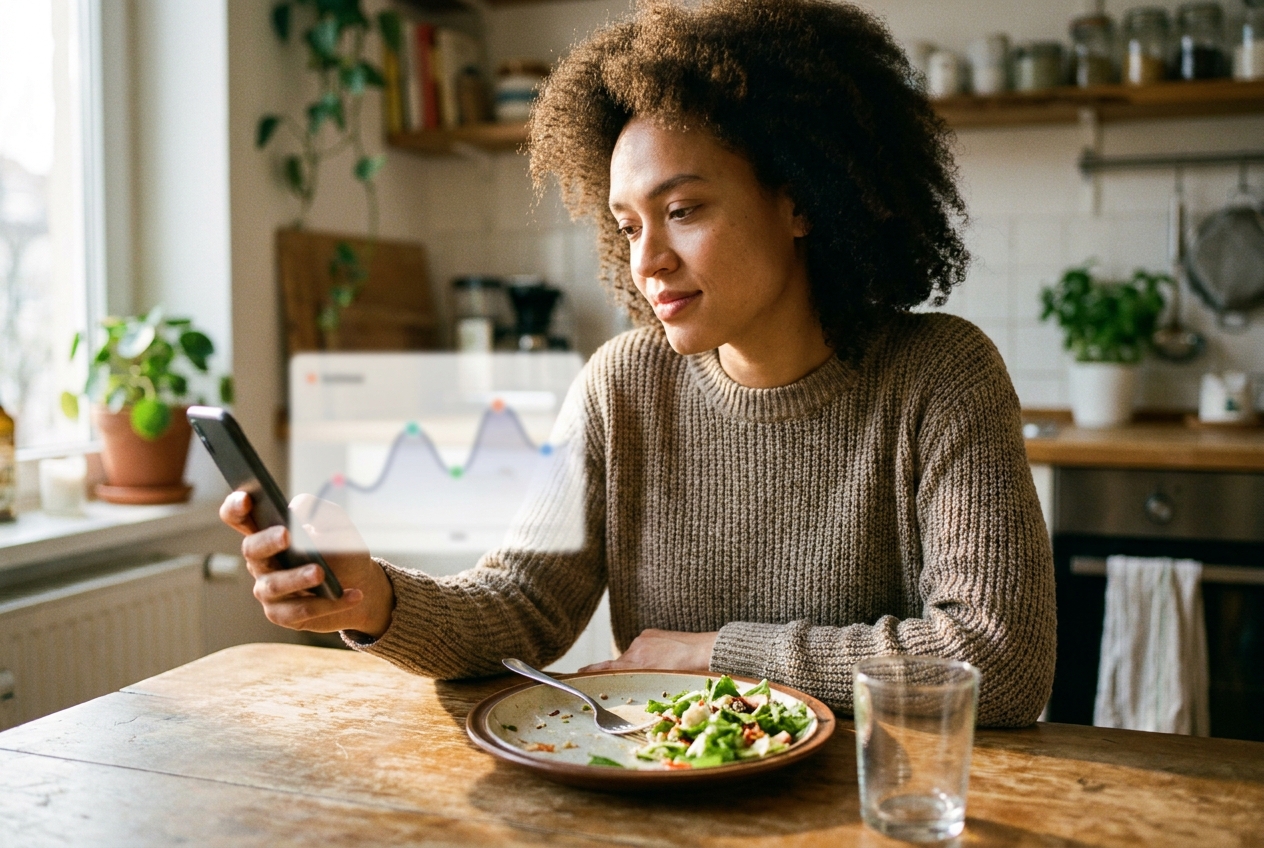
GLP-1 medications like semaglutide and tirzepatide flatten post-meal glucose mainly by slowing gastric emptying and boosting insulin only when glucose is high. Whether botanicals like berberine add anything on top hasn’t been studied in people on these drugs, so the honest answer is “unclear, not a replacement.” Watch for hypoglycemia signs when combining tools, especially with insulin or sulfonylureas.
Key Takeaways
- GLP-1 medications lower post-meal glucose mainly by slowing how fast food leaves the stomach and by triggering insulin release only when blood sugar is elevated, not constantly.
- Tirzepatide adds a second mechanism on top of GLP-1 activity, acting on a related hormone receptor (GIP), which is part of why its effect on post-meal glucose tends to be even larger.
- No published human trial has tested berberine, mulberry leaf, or cinnamon specifically in people already taking a GLP-1 medication, so any added benefit is genuinely unproven, not just unlikely or likely.
- GLP-1 medications alone carry a low risk of hypoglycemia because their insulin-boosting effect is glucose-dependent, but that changes when they’re combined with insulin or sulfonylureas.
- Classic hypoglycemia signs, shakiness, sweating, a racing heart, sudden intense hunger, and confusion, are worth knowing regardless of what combination of glucose-lowering tools someone is using.
If blood sugar improved dramatically after starting semaglutide or tirzepatide, a reasonable next question follows fast: do the botanicals still matter? Is the berberine still doing anything, or is it just along for the ride at this point?
It’s a fair question, and this isn’t the place to talk anyone out of a medication that’s working, or to suggest a supplement could do what these drugs do. GLP-1 medications and glucose-support botanicals work through genuinely different mechanisms, and understanding both helps make sense of what’s actually happening after a meal, and what’s worth paying attention to when combining them.
How Do GLP-1 Medications Flatten Post-Meal Glucose Spikes?
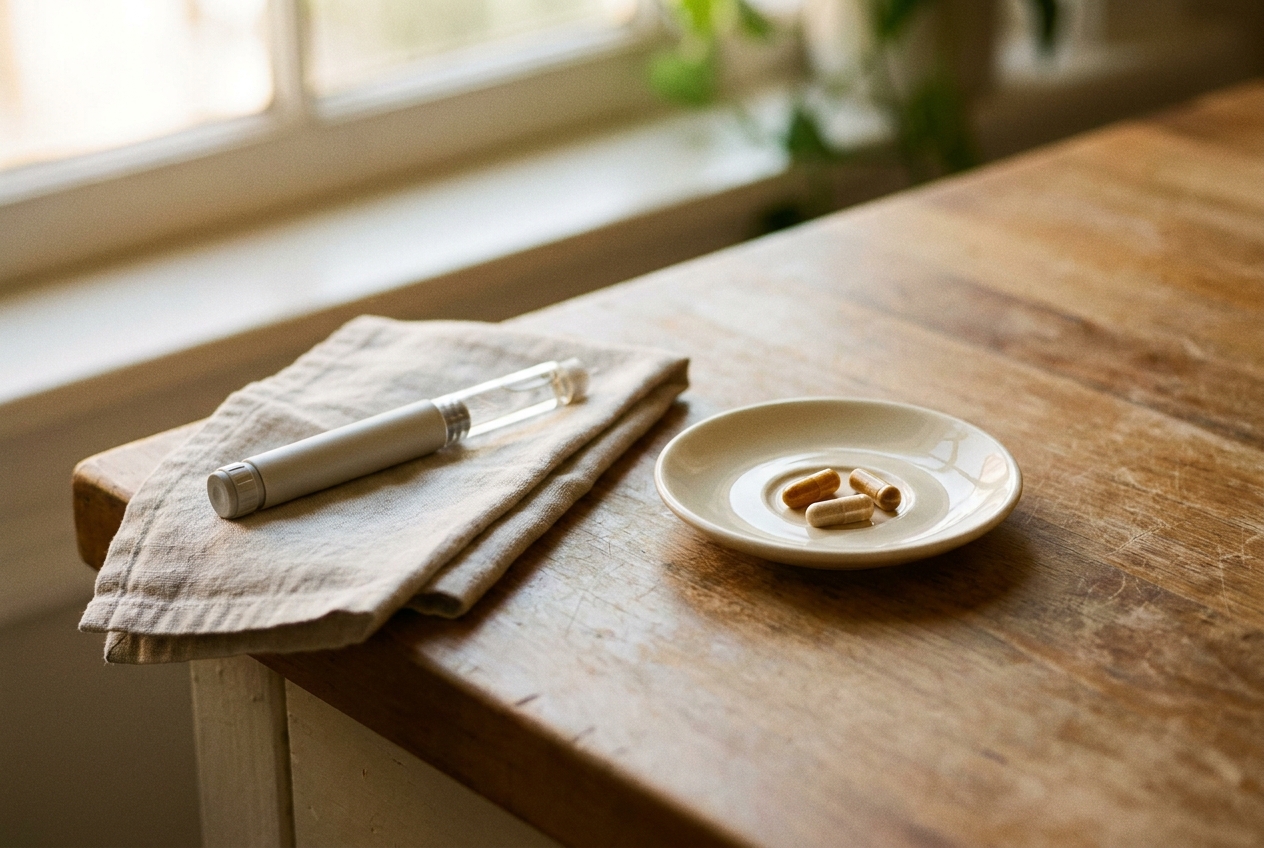
GLP-1 stands for glucagon-like peptide-1, a hormone the gut releases after eating. Medications in this class, including semaglutide, work by mimicking that hormone’s effects, and they do it through a few distinct mechanisms rather than one single action. The first is slowing gastric emptying, meaning food leaves the stomach more gradually, so the glucose from a meal enters the bloodstream over a longer stretch of time instead of all at once (Gentilella et al., 2018, doi:10.1002/dmrr.3070).
The second mechanism is arguably more important: these medications boost insulin release, but only when blood glucose is already elevated, a property called glucose-dependent insulin secretion. They also suppress glucagon, the hormone that tells the liver to release stored glucose, again mainly when glucose is high rather than constantly (Gentilella et al., 2018). Longer-acting agents in this class, which includes semaglutide, affect both fasting and post-meal glucose through this combination of effects, while some older, shorter-acting versions worked mostly through the gastric emptying piece alone.
Tirzepatide adds a layer to this. It activates both the GLP-1 receptor and a related receptor for a second gut hormone called GIP, and this dual action is part of why its effect on post-meal glucose and gastric emptying tends to be even more pronounced than GLP-1 medications alone (Jalleh et al., 2024, doi:10.1210/endocr/bqae155). The net effect across this drug class is a meaningfully flatter, more gradual glucose curve after meals, which is exactly the kind of pattern this site talks about when discussing what a “good” post-meal response looks like.
Do Blood Sugar Botanicals Still Matter If You’re Already on a GLP-1?
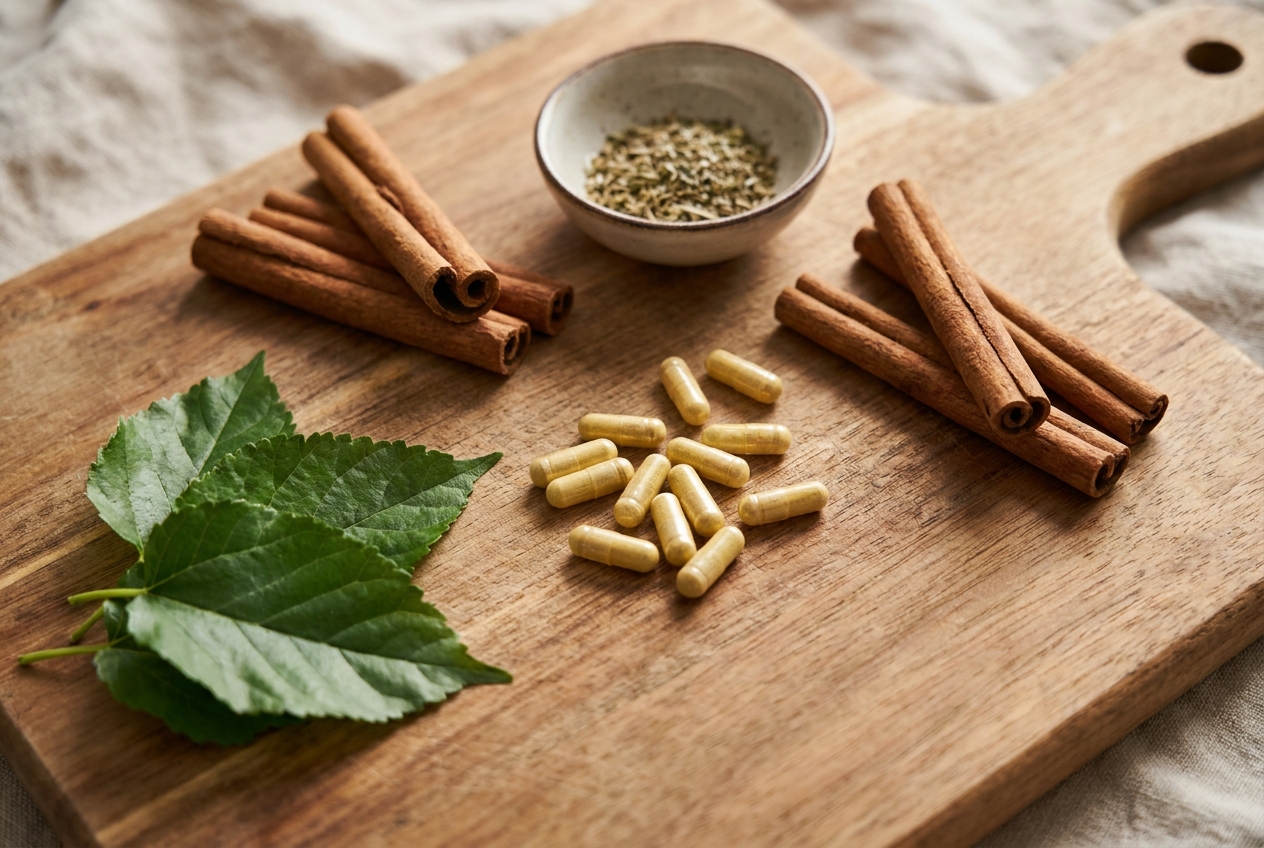
Here’s the honest gap in the research: no published human trial has tested berberine, mulberry leaf, or cinnamon specifically in people who are already taking a GLP-1 medication. Everything known about these botanicals comes from studies in people who weren’t on this drug class, so any claim about what they add on top is an extrapolation, not a measured result.
What can be said is that each botanical works through a mechanism that’s mostly separate from what GLP-1 medications do. Berberine’s glucose-lowering effect, shown across a large pooled analysis of trials to meaningfully reduce fasting glucose, HbA1c, and insulin resistance, is thought to work largely by activating a cellular energy-sensing pathway (AMPK) that increases glucose uptake into cells, a different lever than slowing gastric emptying (Nazari et al., 2023, doi:10.1016/j.clinthera.2023.10.019). Mulberry leaf extract works differently still, partially blocking the enzymes that break down carbohydrates in the gut, and it measurably reduced the post-meal glucose response in a trial of people with impaired fasting glucose (Kim et al., 2014, doi:10.1089/jmf.2014.3160). Cinnamon’s evidence is more modest but points toward improved insulin receptor signaling, with one trial showing a lower post-meal glucose peak after cinnamon tea in non-diabetic adults (Bernardo et al., 2015, doi:10.1155/2015/913651).
Mechanistically distinct doesn’t automatically mean additive in practice, though. Since GLP-1 medications already produce a large flattening effect on post-meal glucose, whatever additional benefit a botanical provides on top of that is likely smaller than what the same botanical would do on its own, simply because there’s less spike left to flatten. That’s a reasonable inference, not a tested fact. For a closer side-by-side look at how these botanicals compare to each other outside the context of GLP-1 use, this comparison of berberine, mulberry leaf, and loquat leaf breaks down the mechanisms in more depth.
Loquat leaf, also known as níspero, falls into this same category of botanical support with its own separate mechanism, and some people explore Level Off by NCL as part of a broader wellness routine alongside, not instead of, prescribed treatment. None of this is a suggestion that any botanical is a substitute for a GLP-1 medication or should change how one is used.
What Hypoglycemia Warning Signs Should You Watch For in This Combination?
GLP-1 medications on their own carry a comparatively low risk of hypoglycemia, precisely because their insulin-boosting effect is glucose-dependent: once blood sugar normalizes, the extra insulin push tapers off instead of continuing to push glucose down (Burness & Scott, 2015, doi:10.1007/s40259-015-0143-4). That changes when a GLP-1 medication is combined with drugs that lower glucose regardless of current levels, particularly insulin or sulfonylureas, where hypoglycemia risk rises meaningfully (Hahr & Molitch, 2022, doi:10.1053/j.ajkd.2021.05.023; Jalleh et al., 2024).
Adding a botanical with a real, measurable glucose-lowering effect, berberine especially, into that picture is where extra attention matters, particularly for anyone also taking insulin or a sulfonylurea alongside a GLP-1 medication. Stacking multiple glucose-lowering tools at once is exactly the scenario worth flagging to a prescriber before starting, rather than figuring out after the fact. The classic hypoglycemia signs are worth knowing regardless of the specific combination: shakiness or trembling, sweating, a racing heartbeat, sudden and intense hunger, irritability or difficulty concentrating, and lightheadedness or dizziness. This guide on why some supplements trigger blood sugar crashes covers the overcorrection pattern behind these symptoms in more detail.
Frequently Asked Questions
Can berberine replace a GLP-1 medication like semaglutide?
No, and that’s not a reasonable comparison to draw from the evidence. GLP-1 medications produce effects, on appetite, gastric emptying, and glucose regulation, through mechanisms and magnitudes that berberine and other botanicals haven’t been shown to replicate. Any change to a prescribed medication should go through the prescribing clinician, not a supplement decision.
Does slower gastric emptying from a GLP-1 medication cause low blood sugar?
Not by itself. Slower gastric emptying changes the timing of glucose absorption, but the hypoglycemia risk on GLP-1 medications comes mainly from combining them with other glucose-lowering drugs that aren’t glucose-dependent, like insulin or sulfonylureas, not from the gastric emptying effect on its own.
Is it safe to take berberine or mulberry leaf while on tirzepatide?
This hasn’t been directly studied, so there’s no research-based yes or no answer. Since tirzepatide already has a pronounced effect on post-meal glucose, anyone considering adding a potent botanical on top should loop in their prescriber first, especially if any other glucose-lowering medication is also part of the picture.
What does a hypoglycemic episode typically feel like?
Common signs include shakiness, sweating, a racing or pounding heartbeat, sudden intense hunger, irritability or trouble concentrating, and dizziness. These symptoms usually resolve with a small amount of fast-acting carbohydrate, but a pattern of recurring episodes is worth discussing with a healthcare provider rather than managing alone.
Why does tirzepatide seem to have a stronger effect on post-meal glucose than older GLP-1 medications?
Tirzepatide activates two related hormone receptor pathways instead of one, adding GIP receptor activity on top of the GLP-1 effect. That dual mechanism is part of why its impact on gastric emptying and post-meal glucose tends to be more pronounced in the research so far.
Summary
GLP-1 medications flatten post-meal glucose through a combination of slower gastric emptying, glucose-dependent insulin release, and glucagon suppression, with tirzepatide adding a second hormone pathway on top of that. Whether botanicals like berberine, mulberry leaf, or cinnamon add meaningful benefit for someone already on one of these medications is genuinely unstudied, not disproven, and it’s reasonable to hold that uncertainty rather than assume either way.
What’s clear is that stacking multiple glucose-lowering tools, medication and botanical alike, is worth a conversation with a prescriber rather than a solo decision, particularly for anyone also on insulin or a sulfonylurea. Watching for hypoglycemia signs is good practice in that situation regardless of which combination is in play.

Continue Exploring
- Berberine vs. Mulberry Leaf vs. Loquat Leaf: Which Is Best for Blood Sugar?
- Why Some Supplements Trigger Crashes
- Stable Energy and Glucose Regulation: Understanding Post Meal Drops
References
- Gentilella, R. et al., “Glucagon-like peptide-1 receptor agonists in type 2 diabetes treatment: are they all the same?,” Diabetes/Metabolism Research and Reviews, 2018. https://doi.org/10.1002/dmrr.3070
- Jalleh, R.J. et al., “Physiology and Pharmacology of Effects of GLP-1-based Therapies on Gastric, Biliary and Intestinal Motility,” Endocrinology, 2024. https://doi.org/10.1210/endocr/bqae155
- Nazari, A. et al., “The Effect of Berberine Supplementation on Glycemic Control and Inflammatory Biomarkers in Metabolic Disorders: An Umbrella Meta-analysis of Randomized Controlled Trials,” Clinical Therapeutics, 2023. https://doi.org/10.1016/j.clinthera.2023.10.019
- Kim, J.Y. et al., “Mulberry leaf extract improves postprandial glucose response in prediabetic subjects: a randomized, double-blind placebo-controlled trial,” Journal of Medicinal Food, 2014. https://doi.org/10.1089/jmf.2014.3160
- Bernardo, M.A. et al., “Effect of Cinnamon Tea on Postprandial Glucose Concentration,” Journal of Diabetes Research, 2015. https://doi.org/10.1155/2015/913651
- Burness, C.B. & Scott, L.J., “Dulaglutide: A Review in Type 2 Diabetes,” BioDrugs, 2015. https://doi.org/10.1007/s40259-015-0143-4
- Hahr, A.J. & Molitch, M.E., “Management of Diabetes Mellitus in Patients With CKD: Core Curriculum 2022,” American Journal of Kidney Diseases, 2022. https://doi.org/10.1053/j.ajkd.2021.05.023
This content is for educational and informational purposes only and does not constitute medical advice. Please consult with a healthcare professional before starting any new supplement, dietary changes, or wellness routine.