
TL;DR
A continuous glucose monitor (CGM) shows a non-diabetic wearer a mostly flat line. Research in healthy adults puts average glucose near 98 mg/dL, with roughly 96% of the day spent between 70 and 140 mg/dL. Post-meal rises, overnight drift and brief dips are all normal, and a CGM alone cannot diagnose anything.
Key Takeaways
- In healthy non-diabetic adults, CGM research reports an average glucose of 98 to 99 mg/dL and about 96% of readings between 70 and 140 mg/dL, so a CGM trace that looks boring is the expected result.
- A CGM measures glucose in interstitial fluid rather than blood, which is why the number on your phone can trail a finger-prick reading by several minutes.
- People with completely normal lab results still spend part of the day in the prediabetic range on a CGM, so a single high reading is a data point, not a diagnosis.
- Two people eating the identical meal can produce very different CGM curves, which is why comparing your graph to someone else’s tells you almost nothing.
- A CGM cannot diagnose prediabetes or diabetes; that still comes from fasting glucose, A1C or an oral glucose tolerance test ordered by a clinician.
Wearing a sensor when you do not have diabetes used to be unusual. It is not anymore: the FDA cleared the first over-the-counter CGM for adults who do not use insulin, aimed squarely at people who want to see how food and movement move their glucose.
Then the data arrives, and the questions start. Is 145 mg/dL after a bagel bad? Why did the line climb at 4 a.m. when nothing was eaten? Why is the number different from the glucometer in the bathroom drawer?
Most of those readings are normal. The trouble is that the reference points people reach for, the ones printed on lab reports, were built for diagnosing diabetes, not for reading a minute-by-minute graph in a healthy body.
How Does a CGM Measure Glucose If You Are Not Diabetic?
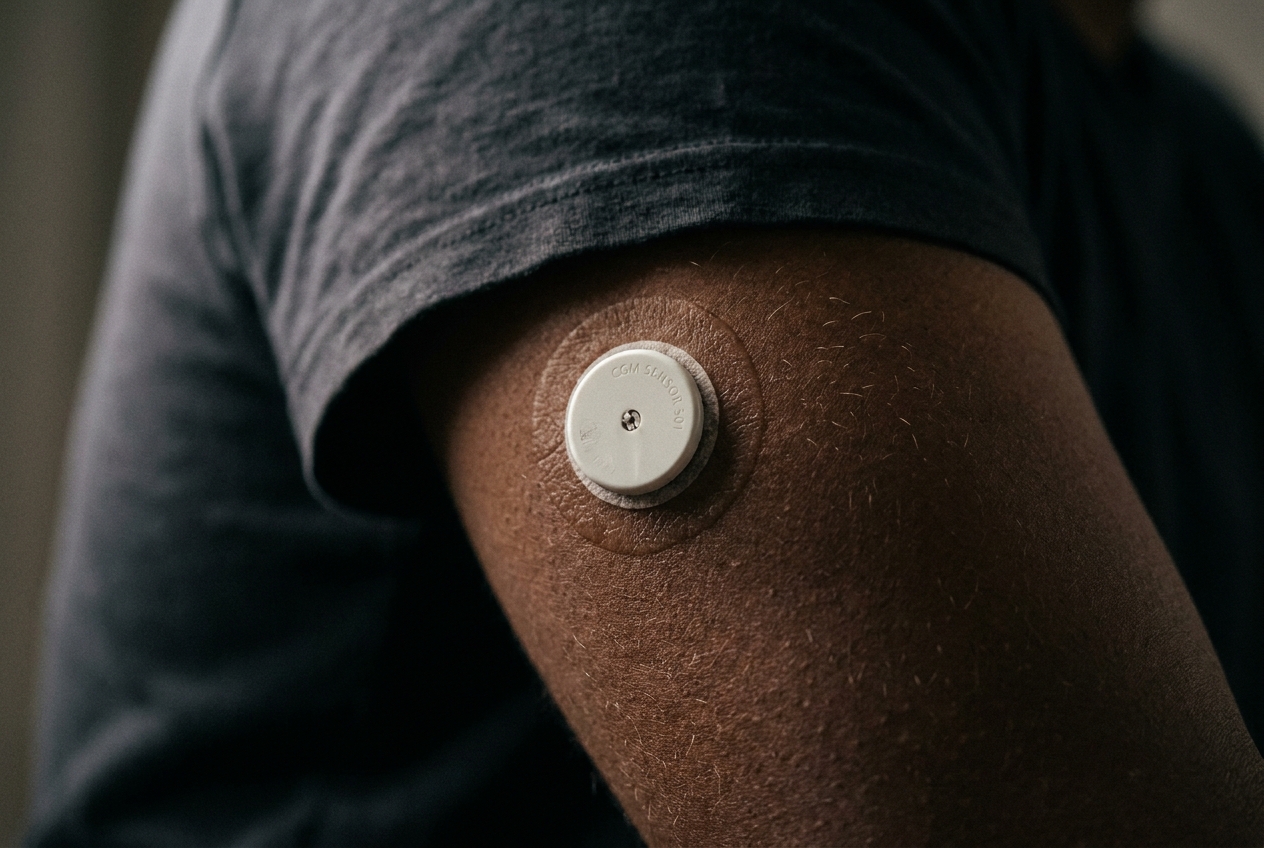
The sensor does not touch blood. A thin filament sits in the interstitial fluid, the watery space between cells just under the skin, where an enzyme reaction produces a small electrical signal proportional to glucose. The transmitter converts that signal and sends a reading to a phone, typically every 5 to 15 minutes.
Glucose reaches that interstitial space by diffusing out of the capillaries, and diffusion takes time. That delay, usually a few minutes and longer when glucose is moving fast, is the single biggest reason a CGM and a finger-prick disagree. During a sharp post-meal climb, the sensor is reporting where your blood was a short while ago.
Pressure matters too. Lying on the sensor can squeeze the fluid around the filament and produce a dip that never happened in your bloodstream, which is why a startling 3 a.m. low on the same arm you sleep on deserves suspicion before alarm.
What Does a Normal CGM Pattern Look Like Without Diabetes?
This is the part almost nobody is given. A multicenter study of 153 healthy non-diabetic participants aged 7 to 80, published in The Journal of Clinical Endocrinology & Metabolism, put blinded sensors on people with normal body weight and no diabetes, then measured what a normal trace actually contains.
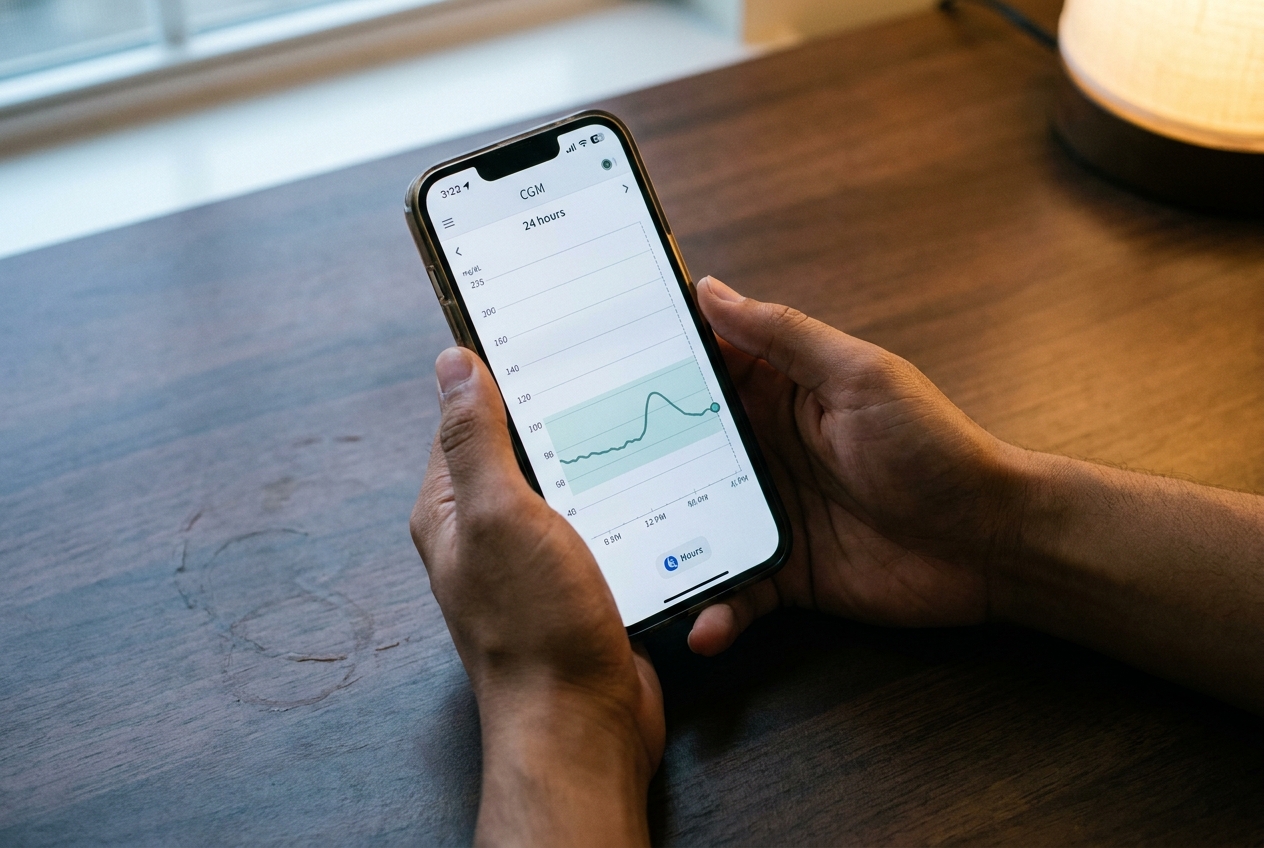
The numbers: average glucose of 98 to 99 mg/dL for every age group under 60, and 104 mg/dL above 60. A median of 96% of the day between 70 and 140 mg/dL. A within-person coefficient of variation of 17%, the standard measure of how much a glucose line wobbles. Median time above 140 mg/dL was 2.1% of the day, about 30 minutes. Median time below 70 mg/dL was 1.1%, about 15 minutes.
Read that last pair again, because it reframes the whole experience of wearing a sensor. Healthy people spend half an hour a day above 140 mg/dL and a quarter of an hour below 70 mg/dL. Excursions are not evidence that something is wrong.
A larger picture comes from CGMap, published in Cell Metabolism, which characterized sensor data from more than 7,000 non-diabetic adults aged 40 to 70 and produced reference values for the main CGM-derived measures. Its authors also found relationships between mean glucose and measures from sleep monitoring, a reminder that the glucose line is reporting on your whole day, not only your plate.
The most useful finding for anyone staring at an unexpected peak came out of Stanford. Research published in PLoS Biology found that people classified as normoglycemic by standard testing still reached prediabetic glucose ranges about 15% of the time and diabetic ranges about 2% of the time when measured continuously. The same work showed that individuals given identical standardized meals produced markedly different curves, and grouped those patterns into what the authors named glucotypes.
What Factors Affect the Numbers You See?
- Meal composition and order. Carbohydrates eaten alone move glucose faster than the same carbohydrates eaten after fiber, protein or fat. Our breakdown of what really flattens a glucose spike ranks the interventions that have the strongest effect, with food sequencing and post-meal walking at the top.
- Movement timing. Muscle contraction pulls glucose out of the bloodstream through a pathway that does not require insulin, which is why a ten-minute walk bends the curve while sitting does not.
- How fast you return to baseline. Peak height gets the attention, but the time your glucose takes to come back down carries its own information, which is the case made in why baseline recovery matters more than peak size.
- Overnight hormones. Glucose commonly drifts upward in the pre-dawn hours as the liver releases stored glucose ahead of waking. If your morning number is the one confusing you, why fasting glucose runs high despite a good routine walks through the dawn phenomenon in detail.
- The sensor itself. Warm-up periods, the first day of a new sensor, compression from sleeping position and the interstitial lag all produce readings that reflect the device rather than your metabolism.
- You. The glucotype research is blunt about this: the same food produces different curves in different people. Your sensor is describing your physiology, not issuing a universal grade on the food.
For people who want to pair those habits with botanical support, loquat leaf is the ingredient behind Level Off, positioned as everyday support.
Frequently Asked Questions
Is a glucose spike after eating normal if I don’t have diabetes?
Yes. Glucose rising after a meal is the expected response to eating carbohydrates. In the healthy participants studied in The Journal of Clinical Endocrinology & Metabolism, readings above 140 mg/dL occurred for a median of about 30 minutes a day. What matters more than the peak is that the line comes back down within roughly two hours.
What is a normal average glucose on a CGM without diabetes?
Research in healthy non-diabetic adults reports an average sensor glucose of 98 to 99 mg/dL, rising to about 104 mg/dL in participants over 60. That same research found a median of 96% of the day spent between 70 and 140 mg/dL, with a within-person coefficient of variation near 17%.
Why does my glucose rise overnight while I sleep?
The liver releases stored glucose in the hours before waking, and hormones that rise toward morning reduce how efficiently cells take it up, so a gentle overnight climb is ordinary. Sleep quality shapes the following day’s readings too, which is why a consistent wind-down is worth as much attention as dinner. Some people build an evening routine around ashwagandha, magnesium and L-theanine, a melatonin-free combination that may support relaxation before bed.

Can a CGM tell me if I have prediabetes?
No. Prediabetes is defined by specific tests: a fasting plasma glucose of 100 to 125 mg/dL, an A1C of 5.7% to 6.4%, or an oral glucose tolerance test result of 140 to 199 mg/dL, as described by the National Institute of Diabetes and Digestive and Kidney Diseases. A CGM pattern that concerns you is a good reason to book that testing, not a substitute for it.
Are CGM readings as accurate as a finger prick?
They measure different things. A glucometer samples capillary blood at one instant, while a CGM estimates glucose in interstitial fluid continuously. The two agree most closely when glucose is stable and diverge most when it is climbing or falling quickly, so a mismatch during a post-meal rise is usually the lag rather than a faulty sensor.
Is wearing a CGM useful if I am healthy?
A 2025 systematic review in Sensors examined CGM use in people without diabetes and found the strongest case is behavioral: immediate feedback on how meals and activity land can support engagement with diet and exercise changes. The same review notes that effects on long-term cardiovascular outcomes in healthy wearers remain unclear.
The Bottom Line
A CGM worn by someone without diabetes mostly confirms that the system is working. Average glucose near 98 mg/dL, most of the day between 70 and 140 mg/dL, a wobble of around 17%, half an hour above range and a quarter-hour below: that is the published picture of normal, and it includes the spikes that look alarming in the moment.
The value is not in grading individual readings against numbers borrowed from diabetes diagnosis. It is in the patterns you can only see with continuous data: which breakfast leaves you flat until lunch, what a walk does to the same meal, how last night’s sleep shows up on this morning’s line. Those are personal, they are actionable, and they are exactly what a single lab draw cannot show you.
Continue Exploring
- Why Blood Sugar Baseline Recovery Matters More Than Peak Spike Size
- Why Is My Fasting Glucose High When I Did Everything Right?
- What Really Flattens a Glucose Spike? 12 Interventions Ranked
References
- Shah VN, DuBose SN, Li Z, et al. Continuous Glucose Monitoring Profiles in Healthy Nondiabetic Participants: A Multicenter Prospective Study. The Journal of Clinical Endocrinology & Metabolism, 2019. https://doi.org/10.1210/jc.2018-02763
- Keshet A, Shilo S, Godneva A, et al. CGMap: Characterizing continuous glucose monitor data in thousands of non-diabetic individuals. Cell Metabolism, 2023. https://doi.org/10.1016/j.cmet.2023.04.002
- Hall H, Perelman D, Breschi A, et al. Glucotypes reveal new patterns of glucose dysregulation. PLoS Biology, 2018. https://doi.org/10.1371/journal.pbio.2005143
- Wilczek F, van der Stouwe JG, Petrasch G, Niederseer D. Non-Invasive Continuous Glucose Monitoring in Patients Without Diabetes: Use in Cardiovascular Prevention, A Systematic Review. Sensors, 2025. https://doi.org/10.3390/s25010187
- U.S. Food and Drug Administration. FDA Clears First Over-the-Counter Continuous Glucose Monitor. https://www.fda.gov/news-events/press-announcements/fda-clears-first-over-counter-continuous-glucose-monitor
- National Institute of Diabetes and Digestive and Kidney Diseases. Diabetes Tests & Diagnosis. https://www.niddk.nih.gov/health-information/diabetes/overview/tests-diagnosis
This content is for educational and informational purposes only and does not constitute medical advice. Please consult with a healthcare professional before starting any new supplement, dietary changes, or wellness routine.